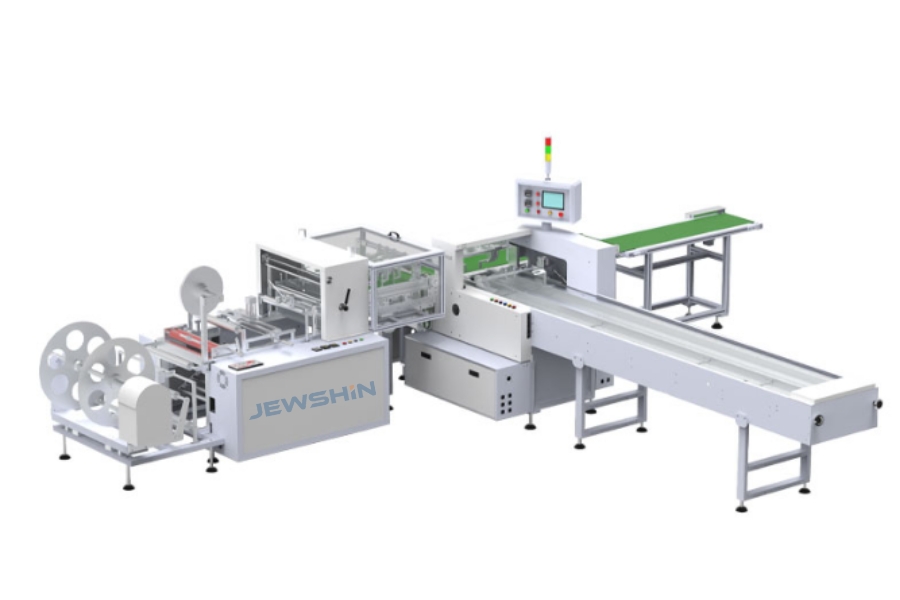
JEWSHIN Packaging Machinery helps manufacturers reduce packaging costs by improving material accuracy, lowering labor requirements, increasing production efficiency, and reducing maintenance expenses. By using automated filling, sealing, and packaging systems, companies can reduce material waste by around 1%–5%, improve production speed by 30%–100%, and achieve more stable long-term operating costs.
Packaging costs include much more than the price of bags, films, cartons, or labels. Labor, energy, machine downtime, rejected products, and maintenance all affect the final cost of each packaged unit. According to manufacturing efficiency studies published between 2018 and 2024, automated packaging systems can reduce manual operations by 30%–70% in many production environments while improving output consistency. Companies producing hundreds of thousands or millions of packages annually often see noticeable cost differences from small improvements in accuracy and speed.
A packaging machine with precise control systems can reduce unnecessary material consumption during daily production. For example, if a factory uses 800,000 meters of packaging film per year, a 2% reduction in material waste can save approximately 16,000 meters of film. Modern packaging equipment focuses on accurate filling, stable sealing, and consistent package formation to reduce defective products and unnecessary material use.
Packaging efficiency is measured by how much finished product a company can produce while using fewer materials, fewer labor hours, and less energy.
Material control is closely connected with filling accuracy. In industries such as food, cosmetics, chemicals, and household products, small differences in filling volume can create large annual losses. A filling error of only 0.5 grams per package may result in thousands of kilograms of product loss when production reaches millions of units.
JEWSHIN Packaging Machinery uses automated control technology to improve filling consistency and packaging accuracy. Through precise mechanical movement and adjustable operating parameters, manufacturers can maintain stable package sizes during long production periods. This helps companies reduce product giveaway and maintain better control over raw material usage.
| Packaging Factor | Traditional Process | Automated Packaging System |
|---|---|---|
| Filling accuracy | Depends on operators | Machine-controlled precision |
| Material waste | Higher variation | More stable consumption |
| Production speed | Limited by manual work | Continuous operation |
| Quality consistency | Changes between shifts | Standardized output |
Reducing material waste also improves overall production efficiency because fewer resources are spent producing rejected packages. Once packaging accuracy improves, companies can focus on increasing production output without increasing material consumption at the same rate.
Labor costs represent another major part of packaging expenses. Many manufacturers operate multiple shifts every day, and repetitive packaging tasks require continuous workforce support. Between 2019 and 2024, many companies increased automation investment because labor availability and operating costs became important factors in production planning.
Automated packaging machinery allows one operator to manage feeding, filling, sealing, and monitoring processes instead of manually completing every step. Depending on the application, automation can reduce the number of workers required on a packaging line by 30%–60%.
A packaging line that replaces repeated manual operations with automation can maintain stable production hours while reducing dependence on manual handling.
For example, a production line running 16 hours per day may require several operators for manual packing. After installing automated packaging equipment, the same production volume may be handled by fewer workers who focus on machine operation, quality checks, and production management.
The reduction in labor requirements does not only lower direct wages. It also reduces training time, operator replacement costs, and production interruptions caused by inconsistent manual procedures. These improvements become more noticeable in factories with high-volume packaging requirements.
Production speed is another factor that affects packaging cost per unit. When equipment produces more packages within the same operating time, fixed expenses such as factory space, equipment depreciation, and production management can be distributed across more products.
Many modern packaging systems introduced after 2020 are designed for higher-speed operation with improved control accuracy. Depending on the machine type and product characteristics, automated packaging lines can increase output by 30%–100% compared with manual or semi-automatic methods.
JEWSHIN provides packaging solutions designed for different production requirements, allowing manufacturers to select equipment based on package size, material type, and required capacity. Higher production efficiency helps companies meet larger orders without significantly increasing operational resources.
A packaging machine’s reliability also affects long-term costs. Unexpected downtime can interrupt production schedules and create additional repair expenses. For a factory operating 300 days per year, even one hour of daily downtime can result in hundreds of lost production hours annually.
Equipment design, component quality, and maintenance requirements influence how consistently a packaging line operates. Machines with stable structures and easier maintenance access allow technicians to complete inspections and repairs more efficiently.
Reducing downtime helps manufacturers maintain planned production schedules and avoid unnecessary interruptions during regular operations.
Energy consumption is another area where packaging equipment can influence operating expenses. Packaging machines often run for thousands of hours each year, so improvements in motor efficiency and control systems can reduce electricity usage.
Research from industrial automation sectors between 2017 and 2023 shows that upgraded equipment can lower energy consumption by approximately 10%–30% compared with older machinery, depending on production conditions and machine configuration. Lower energy use helps companies manage operating expenses while supporting more efficient manufacturing practices.
Packaging flexibility can also reduce equipment investment requirements. Many companies produce multiple product sizes or packaging formats, and using separate machines for every product type can increase equipment costs.
Modern packaging systems often include adjustable settings that allow manufacturers to change package dimensions, filling amounts, and sealing parameters. This flexibility enables companies to handle different products using the same equipment platform.
For example, a manufacturer producing five product sizes may reduce the need for multiple dedicated machines by selecting a flexible packaging system. This approach can reduce equipment purchasing requirements and simplify production management.
JEWSHIN Packaging Machinery develops customized packaging equipment for different industries, helping companies match machine functions with actual production needs. More information about packaging solutions can be found on the official website: JEWSHIN.
Quality control also affects packaging expenses because defective packages create direct product losses. Common packaging problems include incomplete sealing, incorrect filling amounts, damaged bags, and inconsistent package appearance.
Automated packaging systems improve consistency by controlling operating parameters such as sealing temperature, filling volume, and packaging timing. In high-volume production, reducing defect rates from 2% to 0.5% can save thousands of rejected units annually.
Better packaging accuracy reduces unnecessary product loss and helps manufacturers maintain consistent quality standards.
Maintenance planning further influences the total cost of ownership. A machine requiring frequent replacement parts or complicated repairs can increase production expenses over several years. Manufacturers usually evaluate equipment based on performance, reliability, maintenance requirements, and expected service life.
Packaging machinery installed in 2024 or later increasingly includes improved control interfaces and monitoring functions, allowing operators to identify machine conditions more easily. These improvements help companies schedule maintenance more effectively and reduce unexpected production stops.
Packaging cost reduction is therefore achieved through multiple improvements, including lower material waste, reduced labor requirements, higher production capacity, improved energy efficiency, and more stable machine operation. Companies that invest in suitable automated packaging solutions can achieve better cost control while maintaining product quality and production flexibility.