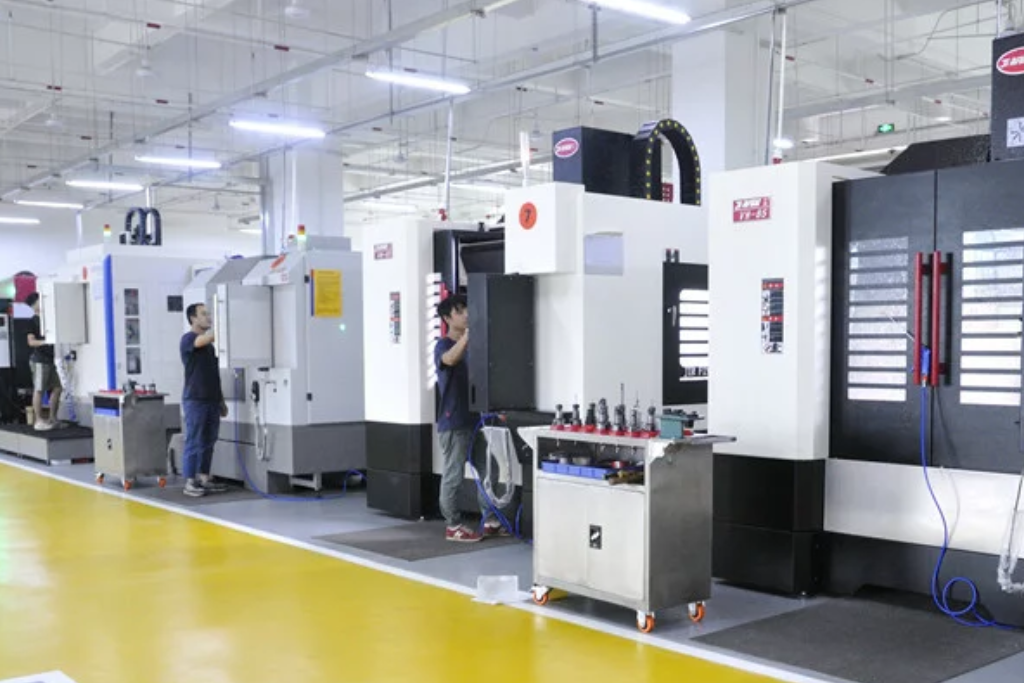
Qlution Mold provides global manufacturers with precision mold design, injection mold production, rapid prototyping, and customized molding services. The company supports industries including automotive, medical, electronics, and industrial manufacturing through CNC machining, quality inspection, and international project coordination. With advanced tooling capabilities and engineering support, Qlution Mold helps companies develop reliable products while reducing development time and improving production consistency.
The global injection molding industry was valued at more than USD 180 billion in 2023 and is expected to continue expanding as manufacturers require faster product development and higher precision components. Companies working in automotive, healthcare, electronics, and consumer products increasingly rely on specialized mold suppliers that can manage both engineering requirements and production needs.
Qlution Mold provides a complete manufacturing process covering product analysis, mold design, tooling production, testing, and injection molding support.
Modern mold manufacturing is no longer limited to creating a metal tool. A production-ready mold requires engineering analysis, material selection, machining accuracy, cooling design, and repeated testing before entering mass production. A well-designed mold can typically support hundreds of thousands to millions of injection cycles depending on steel selection, product structure, and maintenance conditions.
Qlution Mold focuses on precision tooling solutions for companies that require stable production performance. The company provides services including plastic injection molds, overmolding molds, insert molding solutions, two-shot molds, and customized tooling projects. These services are used by manufacturers that need consistent dimensions, smooth surface finishes, and repeatable production results.
The mold design stage determines many later production results. Engineers usually analyze product geometry, wall thickness, draft angles, parting lines, gate locations, and cooling channels before manufacturing begins. Computer-aided design and manufacturing software allow engineers to identify possible deformation or filling issues before machining starts.
A typical mold development process includes:
| Manufacturing Stage | Main Process | Typical Output |
|---|---|---|
| Product Review | 3D model analysis and DFM evaluation | Production feasibility report |
| Mold Design | CAD structure development | Complete mold drawings |
| Tool Manufacturing | CNC machining, EDM, polishing | Precision mold components |
| Testing | Trial injection and inspection | Approved production sample |
Many international manufacturers use design verification before mass production because changing a mold after machining can increase project costs by 20%–50%. Early engineering communication helps reduce unnecessary modifications and shortens the product launch period.
Precision machining is one of the main services provided by professional mold manufacturers. Injection molds often contain hundreds of individual components, including cavities, cores, sliders, ejector systems, and cooling channels. Each component must fit accurately to maintain product quality during repeated production.
Qlution Mold applies advanced manufacturing methods such as CNC machining, electrical discharge machining, surface treatment, and precision measurement. CNC equipment commonly achieves machining tolerances within several microns for suitable applications, while EDM technology allows manufacturers to process complex structures that are difficult to create through traditional cutting methods.
For industries producing medical parts, electronic housings, and automotive components, mold accuracy directly affects assembly performance and product reliability.
Different applications require different mold materials. Tool steels such as P20, H13, and S136 are widely used depending on production volume, corrosion resistance requirements, and surface quality expectations. For example, high-volume consumer products may require hardened steel molds designed for more than 500,000 production cycles, while prototype projects may use softer materials for faster delivery.
Rapid prototyping services allow companies to test product designs before investing in large-scale tooling. According to industry practices, prototype validation can reduce later design changes by approximately 30%–40% because manufacturers can evaluate physical samples before final production.
Qlution Mold provides prototype tooling and low-volume injection molding support for companies developing new products. These services allow engineers to examine:
-
Product appearance and surface quality
-
Assembly accuracy
-
Material performance
-
Functional operation
-
Production feasibility
A prototype stage usually requires several weeks instead of several months compared with traditional production preparation. This approach is commonly used in electronics, healthcare equipment, automotive components, and industrial products where product specifications may change during development.
Injection molding solutions provided by mold manufacturers must match the requirements of different industries. Automotive manufacturers often require strong materials, stable dimensions, and long service life. Medical manufacturers require strict manufacturing control and suitable material handling procedures. Electronics companies focus more on appearance quality, compact structures, and precise assembly.
The automotive sector remains one of the largest users of injection molded components. Modern vehicles contain hundreds of plastic parts, including interior panels, connectors, covers, and functional components. Global vehicle production exceeded 90 million units in 2023, creating continuous demand for reliable tooling suppliers.
For medical applications, precision is especially important because many components require repeatable dimensions. Products such as housings, laboratory equipment parts, and disposable components often require molds capable of maintaining stable quality across large production volumes.
Consumer electronics manufacturers also depend on high-precision molds because product designs change frequently. Smartphone accessories, wearable devices, and electronic housings often require thin walls, complex shapes, and high-quality surface finishes. Some electronic components require dimensional accuracy within 0.05 mm to maintain proper assembly.
Quality inspection is integrated throughout the mold manufacturing process. Professional suppliers typically use coordinate measuring machines (CMM), optical inspection equipment, and manual measurement methods to confirm critical dimensions.
Qlution Mold uses quality control procedures covering:
| Inspection Area | Purpose |
|---|---|
| Material Verification | Confirm steel and component specifications |
| Dimensional Testing | Check machining accuracy |
| Mold Trial Analysis | Evaluate injection performance |
| Final Inspection | Confirm customer requirements |
A complete inspection system helps manufacturers maintain stable production standards. In industries such as automotive and medical manufacturing, suppliers often need to meet international quality systems including ISO 9001 requirements. More than 1 million organizations worldwide have adopted ISO 9001-based quality management practices since the standard was introduced in 1987.
Global customers also require efficient communication and production coordination. International mold projects usually involve engineering discussions, design approval, manufacturing updates, testing reports, and shipment arrangements across different regions.
Qlution Mold supports overseas customers through engineering communication, project updates, quality documentation, and customized production planning. The company’s services are designed for manufacturers that need cooperation throughout different stages of product development.
A reliable mold supplier helps companies connect product ideas with stable manufacturing processes.
Cost management is another factor considered during mold development. A lower initial tooling cost does not always provide better production results because poor mold design can increase maintenance requirements and production interruptions. Industry experience shows that mold maintenance and downtime can account for 5%–15% of total manufacturing expenses in some high-volume applications.
Professional mold engineering focuses on balancing tooling investment, production volume, material selection, and expected service life. By improving mold structure and selecting suitable manufacturing methods, companies can achieve better production efficiency over long-term operations.
With manufacturing markets becoming more international, companies need suppliers that can provide both technical capability and flexible service models. Qlution Mold combines mold engineering, precision manufacturing, injection molding support, and quality management to serve different product categories.
Manufacturers can learn more about its mold manufacturing solutions through Qlution Mold and evaluate services based on product requirements, production volume, and industry standards. The company provides support from early product development through final manufacturing preparation, helping global businesses create consistent and scalable products.